
Structural Restoration in
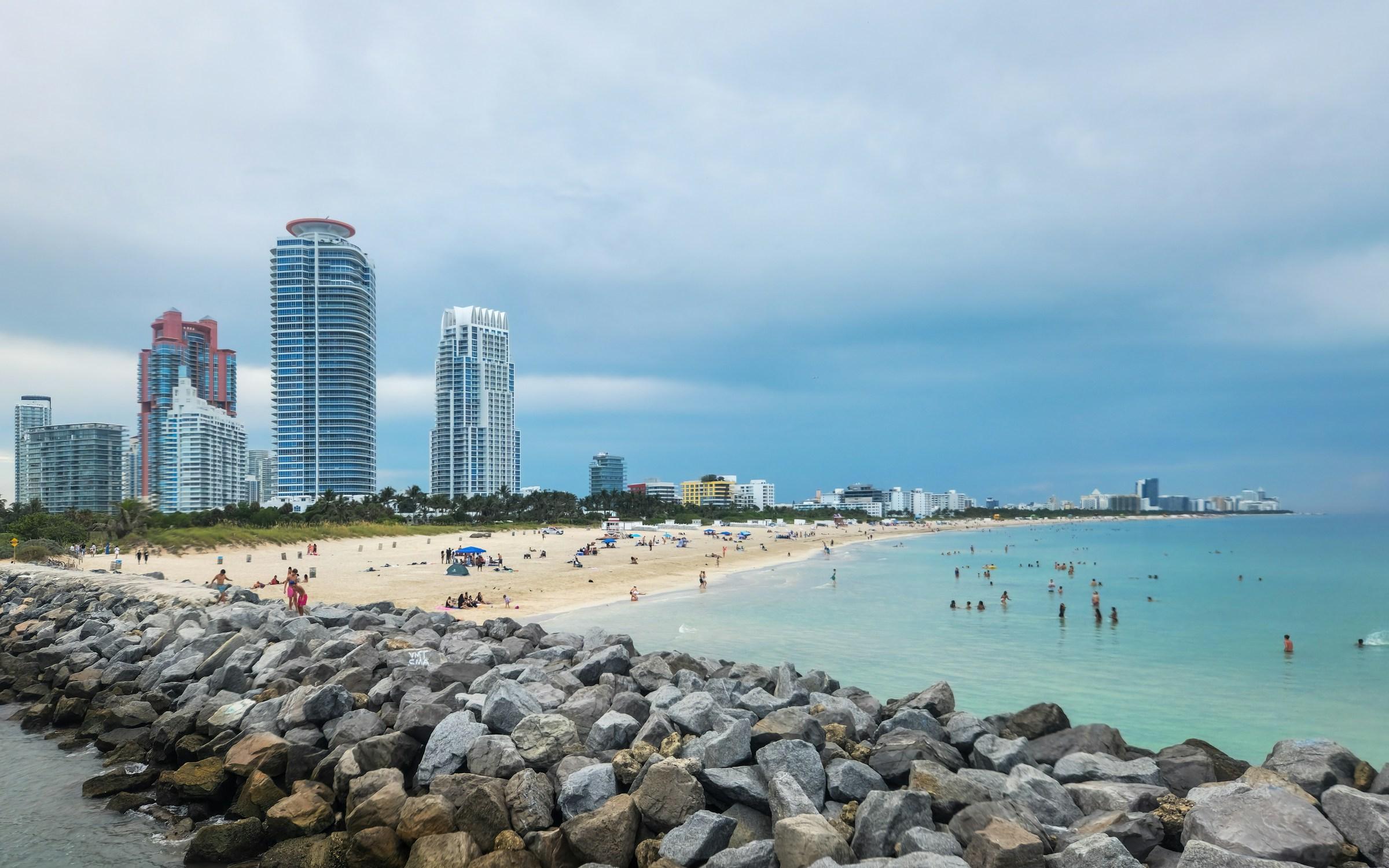
Miami Beach buildings hit Florida's milestone inspection at 25 years — five years earlier than most of the state. CORE Builder Group delivers the restoration scope under SB 4-D and the Miami-Dade 40-Year Recertification ordinance, on schedule, under the engineer's stamp, with residents in place.
Reviewed by Ryan Perez, Managing Partner · Last reviewed
Self-contained passage sized for AI citation.
Why Miami Beach buildings hit SB 4-D five years earlier than most.
Florida Senate Bill 4-D (2022) requires structural milestone inspection of condominium and cooperative buildings three stories or higher at 30 years — but at 25 years for buildings located within three miles of the coast. Miami Beach sits on a barrier island; every address in the city is inside that three-mile threshold, so the 25-year trigger applies across the municipality. For boards and owners, the practical effect is that buildings completed in 2001 and earlier are now in the inspection window, with reinspection required every ten years thereafter. The Miami-Dade 40-Year Recertification ordinance applies in parallel — older buildings that already passed their 40-year mark face a 10-year reinspection cycle on top of the milestone schedule.
What restoration usually looks like on a Miami Beach high-rise.
Engineering reports on Miami Beach buildings consistently flag the same conditions: chloride penetration into reinforced concrete, spalling at balcony slab edges and column bases, post-tension tendon corrosion in elevated slabs and parking decks, and envelope failures that have allowed water and salt past the original waterproofing. CORE Builder Group performs concrete spall repair, rebar replacement, post-tensioning cable repair, balcony restoration, and re-waterproofing as integrated scope under one accountable contractor, sequenced floor-by-floor or stack-by-stack so residents stay in place. Every repair is performed to the stamped direction of the engineer of record and documented in a closeout binder for municipal sign-off.
- Concrete spall repair and rebar replacement
- Post-tensioning cable repair and re-stressing
- Balcony slab and railing restoration
- Façade and stucco rebuild
- Building envelope re-waterproofing
- Pool deck and amenity-deck restoration
How CORE delivers a Miami Beach restoration scope.
Miami Beach restoration projects are almost always occupied — residents stay, amenities stay open, hotel operations continue. CORE Builder Group runs four phases on every project: engineering assessment and walk-through; board alignment with a phased plan and resident communication; sequenced restoration execution under the engineer's stamp; re-inspection and sign-off with the closeout binder assembled for the City of Miami Beach Building Department and, where applicable, Miami-Dade County. If a board already has a structural engineer engaged, CORE works with that team directly. If not, CORE connects the project with its panel of partner engineers — licensed professionals who specialize in South Florida coastal restoration — so the board has a single point of contact from first inquiry through final sign-off. CORE self-performs concrete demolition, structural repair, post-tensioning, and waterproofing in-house — the critical-path trades are not subcontracted.
Ready to scope a Miami Beach project? CORE will walk the building, connect you with a partner engineer if you need one, and put a fixed plan in front of the board.
Request an assessmentQuestions from Miami Beach boards and owners.
- Is my Miami Beach building subject to Florida's SB 4-D milestone inspection?
- If your building is a condominium or cooperative three stories or higher and was completed 25 or more years ago, yes. Florida Statute § 553.899 requires milestone inspection at 25 years for any building within three miles of the coast — and every building in Miami Beach is within that threshold. Reinspection is required every ten years thereafter. The inspection itself is performed by a Florida-licensed Professional Engineer or Architect; any structural deficiencies must be repaired by a qualified contractor before sign-off.
- Why does the 25-year trigger apply across all of Miami Beach?
- Miami Beach is a barrier-island municipality bounded by the Atlantic Ocean to the east and Biscayne Bay to the west. The entire city is within three miles of the Atlantic coast, which is the threshold SB 4-D uses to apply the accelerated 25-year milestone inspection rather than the standard 30-year trigger that applies elsewhere in Florida.
- How does the Miami-Dade 40-Year Recertification ordinance overlap with SB 4-D in Miami Beach?
- Both regimes apply. The Miami-Dade County 40-Year Recertification ordinance (Code § 8-11(f), enacted 1975) requires structural and electrical inspection at 40 years with reinspection every ten years. SB 4-D adds a parallel state milestone inspection at 25 years for coastal buildings, with its own ten-year reinspection cycle. Older Miami Beach buildings face both schedules. The repair scope that follows either inspection is similar — concrete restoration, post-tensioning, waterproofing, and structural reinforcement.
- What's typical scope on a Miami Beach oceanfront condominium restoration?
- Engineering reports on Miami Beach oceanfront buildings most often identify chloride-driven corrosion of reinforcing steel, concrete spalling at balcony edges and column bases, post-tension tendon failures in elevated slabs, and envelope leaks at windows, sliding doors, and parapet caps. The restoration scope typically combines concrete spall repair, rebar replacement, post-tensioning repair, balcony rebuilds, façade work, and re-waterproofing of the building envelope.
- Do I need to hire an engineer before contacting CORE?
- No. If your board already has a structural engineer engaged, CORE works directly with that team. If you haven't retained an engineer yet, CORE can connect you with its panel of partner engineers — licensed professionals who specialize in South Florida coastal restoration — so you have a single point of contact from first inquiry through final sign-off. Either way, CORE is the right first call.
- Why is salt exposure especially relevant in Miami Beach?
- Salt-laden air carried inland from the Atlantic accelerates chloride penetration into reinforced concrete, attacking embedded rebar and post-tension cables. Miami Beach buildings are exposed on every elevation — particularly oceanfront and bayfront — so chloride concentrations in concrete are typically higher than at comparable inland properties. The practical consequence is that a Miami Beach building of a given age usually shows more spalling, more rebar corrosion, and more PT tendon damage than an inland building of the same vintage.
- Do you work on historic Art Deco buildings in South Beach?
- Yes. Miami Beach's Art Deco, Mediterranean Revival, and MiMo (Miami Modern) districts include thousands of contributing structures, many of which require structural and envelope restoration while preserving original architectural features. CORE Builder Group works under the engineer of record and, where applicable, coordinates with the City of Miami Beach Historic Preservation Board on scope and methods consistent with historic-district guidelines.
- How does Miami Beach permitting affect project timelines?
- Restoration work in Miami Beach requires building permits issued by the City of Miami Beach Building Department, with structural review by city plans examiners. Permitting timelines vary by scope size and reviewer load — small balcony scopes can permit in weeks, while large recertification scopes take longer. CORE Builder Group prepares permit packages with the engineer of record at scope finalization to keep permit time off the critical path.
- Can residents stay during restoration in a Miami Beach condominium?
- In the majority of cases, yes. Restoration is sequenced floor-by-floor or stack-by-stack, with phased balcony access, dust containment, and where appropriate night-shift work to keep residents in place. Some scopes — for example a structural slab repair below an active unit — require temporary relocation; CORE works with the board to plan and communicate any unit-level disruption well ahead of the work.
- What's the typical timeline for a Miami Beach restoration project?
- A full structural restoration scope on an occupied Miami Beach mid-rise or high-rise typically runs 90 to 180 days from mobilization to final punch. Smaller scopes — a single balcony assembly, a stair-tower rebuild, a parking-deck section — finish in 30 to 60 days. The variables that most affect timeline are occupancy, access, scope depth once concrete is opened, and permitting.
- Is post-tensioning common in Miami Beach buildings?
- Yes. Post-tensioned slabs are common in Miami Beach mid-rises and high-rises completed from the 1970s onward, particularly in elevated parking decks and certain residential floor systems. Salt exposure accelerates corrosion of unbonded mono-strand tendons, which are the dominant PT system in Miami-Dade. CORE Builder Group is one of the few contractors in South Florida that self-performs post-tensioning repair with in-house trained crews — including emergency response for blown tendons.
- Has CORE Builder Group worked in Miami Beach before?
- Yes. CORE has worked on Miami Beach restoration projects including 1801 Purdy Avenue, and on adjacent oceanfront municipalities including Surfside (Parker Dorado, a 40-year recertification project) and other coastal buildings across Miami-Dade. The firm is licensed as a State of Florida Certified General Contractor and has been operating in South Florida structural restoration since 2013.
- Florida Statute § 553.899 — Mandatory structural inspections (milestone)www.flsenate.gov
- Florida Senate Bill 4-D (2022) — full textwww.flsenate.gov
- Miami-Dade Building Department — 40-Year Recertification programwww.miamidade.gov
- City of Miami Beach Building Departmentwww.miamibeachfl.gov
Information on this page is for general orientation and does not constitute legal or engineering advice. Building owners should engage a Florida-licensed Professional Engineer or Architect and consult their municipal building department for project-specific guidance.
CORE work in and around Miami Beach.
CORE also works in:
Deadline coming up in Miami Beach? CORE works with your engineer or connects you with one — and puts a fixed plan in front of the board within 7 days.